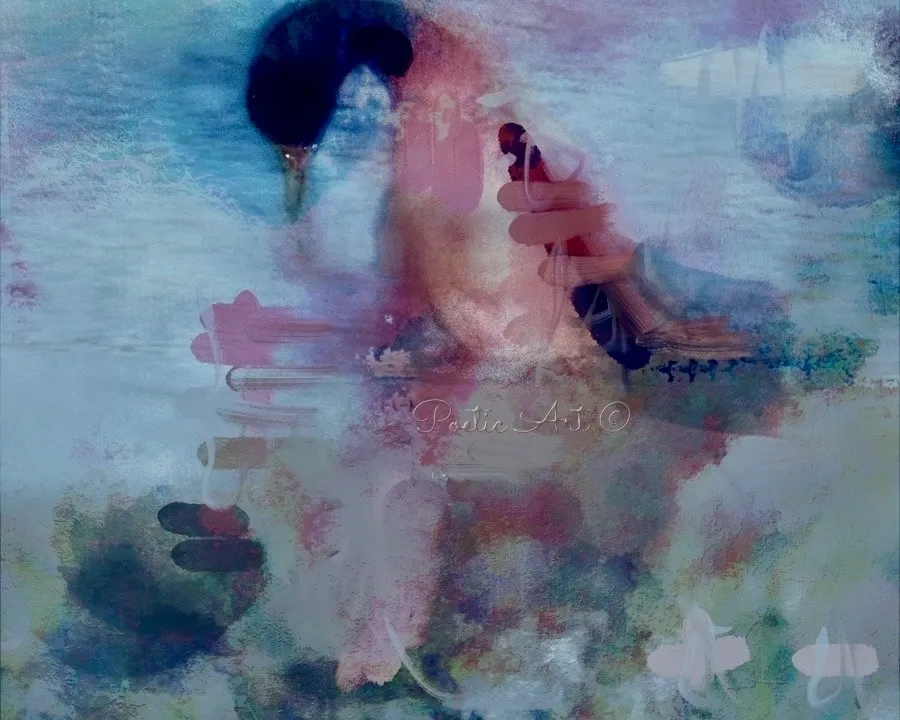
Into the Air
Seeking Absolvement
The poetic reality, The awareness of light against dark or dark against light, The symbolism of this antagonism, The absorption of a trust that exists within. We all wait in our own confused states seeking absolvement, on lines alone, or in crowds. Sanctuaries or dreams, the places we enter to make known our needs. Copyright © Susy Kamber This feels like a summation piece—quietly philosophical, inward, and human. “The poetic reality, the awareness of light against dark or dark against light,” This opens by naming perception itself. Not just opposites, but awareness of them. Light and dark are not moralized yet—they are conditions of seeing. Which one presses against the other matters. “the symbolism of this antagonism,” Here the contrast becomes charged. Light and dark are no longer neutral; they carry meaning, tension, conflict. The word antagonism suggests struggle without declaring a victor. “the absorption of a trust that exists within.” This line turns inward. Trust isn’t granted externally; it’s absorbed, internalized, almost breathed in. Even amid opposition, there is something quietly held and relied upon. “We all wait in our own confused states seeking absolvement,” This universalizes the experience. Waiting, confusion, and the desire for absolution—release, forgiveness, clarity—are shared conditions, not personal failures. “on lines alone, or in crowds.” Whether isolated or surrounded, the waiting persists. Loneliness can exist in both solitude and togetherness. “Sanctuaries or dreams, the places we enter to make known our needs.” The closing lines offer gentleness. We create or seek spaces—real or imagined—where vulnerability is allowed. Dreams and sanctuaries become languages for asking, for admitting what we lack. Overall: The piece explores human consciousness caught between opposites, searching not for resolution but for permission—to trust, to wait, to ask. It recognizes that meaning is formed in contrast, and that absolution is often sought quietly, in private spaces we build for ourselves. It’s contemplative, compassionate, and unafraid of uncertainty. (Explanation by ChatGPT)
2024
Photograph
A Soft Dialogue
Air blown velvet around window sills. The reflection outside as the curtain is pulled aside contains water possessed with puddles dressed in white chiffon. Sheer flowers and a visiting butterfly flirts with my eyes. Lilting shadows decorate the wall. Speaking to each other in the morning. A surprising grin on my face as I turn to get dressed. The soft shadows contained on the glassy surface. Speak to each other. Caressed shades of green. Cashmere goats see themselves gaze into the stream. Sipping themselves. Copyright - Susy Kamber All rights reserved Song Selection - Yumeji’s Theme from “in the Mood for Love” Shigeru Umebayashi “Air blown velvet around window sills.” Morning arrives softly, tactile rather than visual. Air behaves like fabric, cushioning the threshold between inside and outside. The day doesn’t intrude—it drapes itself gently. “The reflection outside as the curtain is pulled aside contains water possessed with puddles dressed in white chiffon.” Light transforms the ordinary. Puddles become adorned, almost ceremonial. “Possessed” suggests enchantment—water holding something more than itself. The world is briefly dressed for you. “Sheer flowers and a visiting butterfly flirts with my eyes.” Attention becomes reciprocal. You are not just seeing beauty; beauty notices you back. The flirtation is light, playful, fleeting—no grasping, just exchange. “Lilting shadows decorate the wall. / Speaking to each other in the morning.” Shadows gain voice. They aren’t empty absences of light but active presences, conversing quietly. Morning itself feels social, alive with small communications. “A surprising grin on my face as I turn to get dressed.” This is the human pivot point. Wonder slips naturally into the everyday. The grin is unforced—a reflex of gratitude rather than intention. “The soft shadows contained on the glassy surface. / Speak to each other.” Repetition here feels deliberate, like echo. Reflection upon reflection—light speaking to light, perception folding back on itself. “Caressed shades of green.” Color is touched, not seen. Green becomes a sensation—growth felt rather than observed. “Cashmere goats see themselves gaze into the stream. / Sipping themselves.” This closing is quietly profound. The goats drink water, but also their own reflection. It suggests self-recognition without self-consciousness—being nourished by simply being. No judgment, no separation. Summary This poem captures an intimate morning moment where perception, reflection, and self-awareness gently blur. Everything—air, water, shadow, animal, human—participates in a soft dialogue. It’s about recognizing oneself within the world rather than apart from it. The final image offers a kind of wisdom: to sip life as it reflects you back, without urgency, without doubt. (Interpretation by ChatGPT)
2026
Photograph
Into the Air
Folded like birds. Into paper. Something like that happens. Every time the sculptor makes a person move. Bend, brace and take off. He woke up that morning thinking about where they all go. © Susy Kamber All rights reserved This piece feels quietly metaphysical—about creation, animation, and release. “Folded like birds. / Into paper.” This immediately evokes origami: fragility, intention, and transformation. Birds imply freedom and flight; paper implies delicacy and constraint. Together, they suggest potential—something light and alive, made from something flat and ordinary. “Something like that happens.” The line softens certainty. It acknowledges approximation rather than explanation, as if the speaker knows the feeling but not the mechanism. Creation is intuitive, not fully rational. “Every time the sculptor makes a person move.” Here the sculptor is more than an artist—possibly a stand-in for a god, creator, animator, or even time itself. To “make a person move” suggests giving life, intention, or direction. “Bend, brace and take off.” These are stages of motion and readiness. Bend implies vulnerability, brace suggests preparation or resistance, and take off is release—departure, flight, or death. It mirrors both physical movement and existential transition. “He woke up that morning thinking about where they all go.” This closing line grounds the abstract in human doubt. Even the creator wonders about aftermath—what happens once creation is released. It hints at mortality, autonomy, and the quiet loneliness of letting go. Overall The passage reflects on the act of making life or meaning and then losing control of it. People, once shaped, move on—like paper birds launched into the air. The creator can initiate motion but cannot follow its destination. It’s tender, questioning, and filled with awe at what escapes our hands once set in motion. (Explanation by ChatGPT)
2025
Photograph