
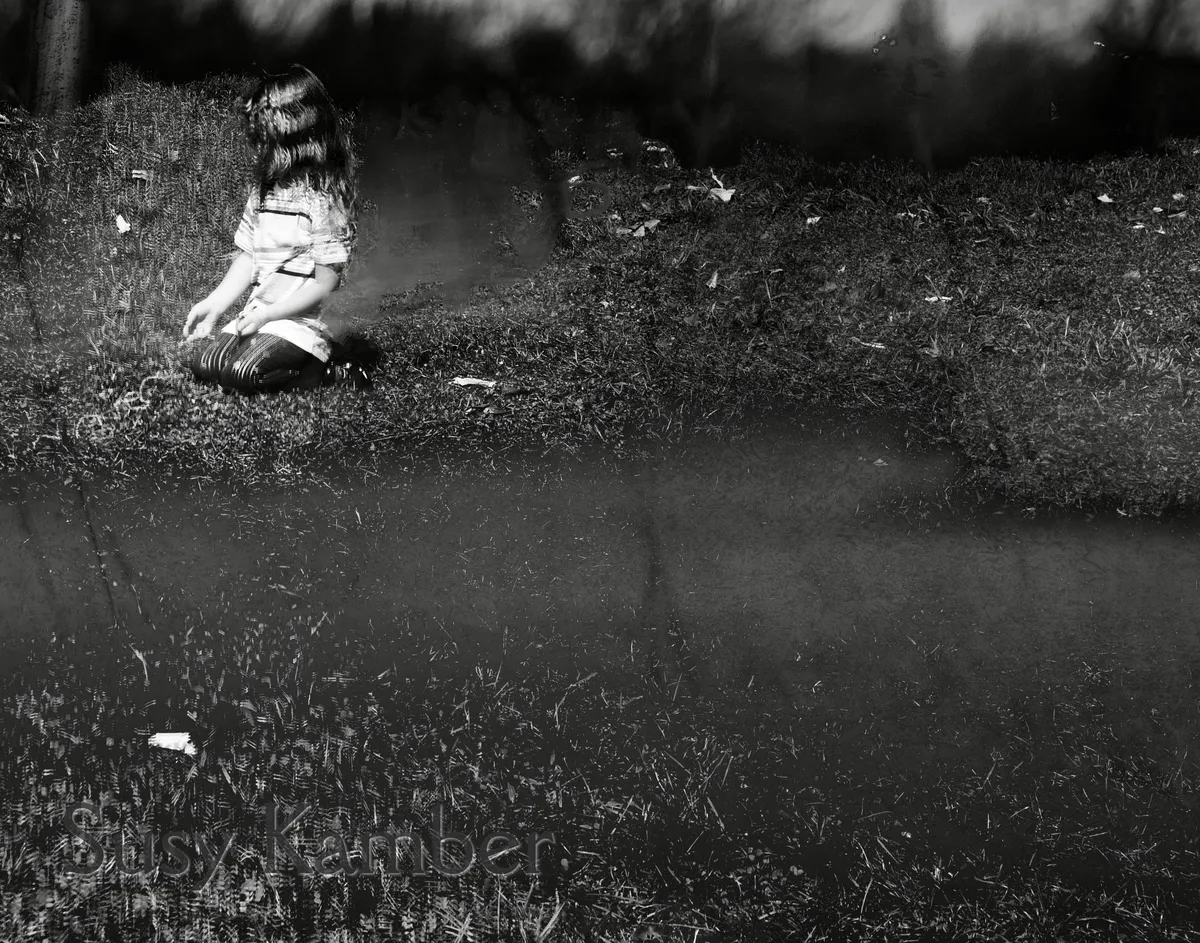
The Literary Heart © Susy Kamber
Photograph
2026
Creation dateIt’s always amazing what exists under the water, sometimes we see what we know is there, things alive taking up space the water offers or simply making their existence within... wet. A coat of water around everything. Momentarily, as the wave recedes I have the notion I too would like that coat around me. Copyright © Susy Kamber, - Song Selection - I Will Find You - audiomachine. - “The following is a reflection provided by ChatGPT, offering one way of understanding this piece. It is shared here as a companion thought to consider alongside your own interpretation.” - “It’s always amazing what exists under the water,” This opens with wonder. Water becomes a veil: a surface that hides a whole world. There’s curiosity here, but also humility—an acknowledgment that much of reality exists beyond immediate sight. - “sometimes we see what we know is there,” This suggests partial awareness. We recognize life beneath the surface even when we can’t fully see it. Knowledge without full access. Intuition rather than proof. - “things alive taking up space the water offers or simply making their existence within… wet.” Life is described as adapting rather than conquering. The water “offers” space; beings accept it. “Wet” becomes a condition of being—existence shaped by environment. There’s no separation between self and surroundings. - “A coat of water around everything.” This is a striking metaphor. Water becomes a skin, a protective layer, even a unifier. Everything is equally wrapped—no hierarchy, just shared immersion. - “Momentarily, as the wave recedes” A fleeting pause. The receding wave creates a threshold moment—between immersion and exposure, presence and absence. - “I have the notion I too would like that coat around me.” Here the observation turns inward. This isn’t about wanting to be underwater literally; it’s about longing for what water represents: protection, softness, anonymity, belonging, or relief from sharp edges of air, light, and separation. - In summary (the literary heart): The passage reflects on life existing fully within its environment, wrapped and sustained by it, and contrasts that with human exposure. The speaker briefly longs for the same kind of enveloping presence—a gentle covering that allows existence without friction, judgment, or dryness. It’s about desire for immersion, protection, and unity, even if only for a moment.
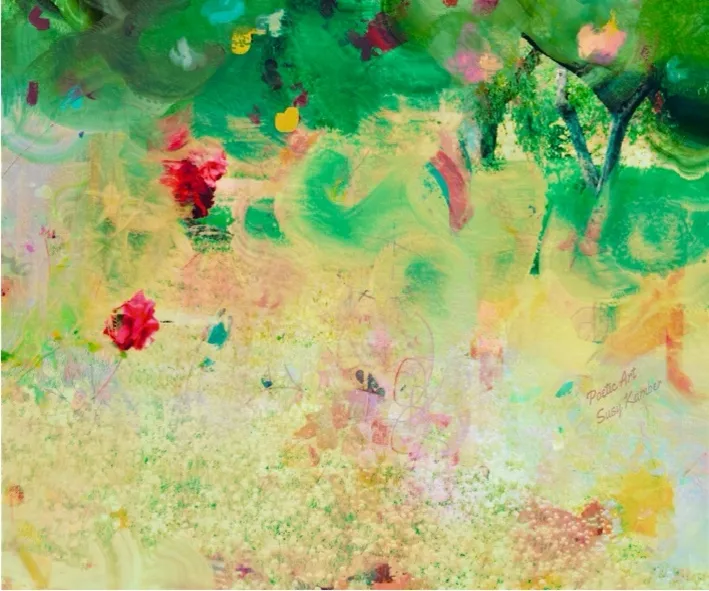
Vibrations and Rhyme - Copyright © Susy Kamber
Photograph
2025
Creation dateThe breath of trees touching the air. Touching your heart as you become aware. Of colors unseen. In the usual manner. Noticing those colors and starting to wonder. The brilliance of red, the softness of blue, greens becoming purples and blacks to dream through. Some say the light brought them here to us all. For some it is light overcoming a brawl. Some say the colors are put there to stay. Perhaps the colors have no other way. Enlightenment is such, arriving on time. Inside vibrations, reverberations and rhyme. Copyright - S. Kamber All rights Reserved Song Selection - Knocks Me Off My Feet - Stevie Wonder
A Secret © Susy Kamber
Photograph
2026
Creation dateClouds hold secrets. Misty scenes of show and tell. To translate. See the horse driven chariot. You can wonder where it’s heading. But that’s a secret. You can stare at how the curls of cloud substances made the design. Also, a secret. The wind blows those secrets into something new. They are blown into you. (This poetic verse introduces the concept of pareidolia) “Pareidolia is the psychological phenomenon where people perceive familiar patterns, such as images or shapes, in random stimuli. This often occurs with visual patterns, like seeing faces or objects in clouds. Examples of Pareidolia * Cloud Shapes: Many people report seeing animals, faces, or other recognizable forms in cloud formations. * Inanimate Objects: Pareidolia can also happen with everyday objects, such as seeing faces in rocks or furniture. * Cultural References: Famous instances include the "Man in the Moon" or the Virgin Mary appearing in food items. Why It Happens The human brain is wired to recognize patterns, especially faces. This tendency is thought to be an evolutionary trait that helped early humans identify friends or foes quickly. The fusiform gyrus, a part of the brain, is particularly active when we perceive faces, even in random patterns. Conclusion Seeing images in clouds is a common experience linked to pareidolia, showcasing our brain's ability to impose meaning on randomness.” “The following is a reflection provided by ChatGPT, offering one way of understanding this piece. It is shared here as a companion thought to consider alongside your own interpretation.” 2026 “Your poem turns the sky into a canvas of mystery, where clouds become secret vessels of shapes and stories. It mirrors the human mind’s natural urge to find meaning—seeing horses, chariots, or faces in randomness—while celebrating the fleeting, ever-changing beauty of perception. In this space, imagination and reality merge, as the secrets of the clouds are not just observed but absorbed, becoming part of the observer’s own wonder.”
In Another Life © Susy Kamber
Photograph
2024
Creation dateWhereupon the formerly grey land realized it had turned away from its shallow state. The earth opening up all its flowers. Every scent that was ever made floating into your mouth. The taste of it akin to a sensation not unlike an evening breeze touching your face. Circling your legs. Awareness a brush, smoothing all the knots that had made their way into your soul. © Susy Kamber - Song Selection - In un’altra vita - Ludovico Einaudi
Into the Air © Susy Kamber
Photograph
2025
Creation dateFolded like birds. Into paper. Something like that happens. Every time the sculptor makes a person move. Bend, brace and take off. He woke up that morning thinking about where they all go. © Susy Kamber All rights reserved, “The following is a reflection provided by ChatGPT, offering one way of understanding this piece. It is shared here as a companion thought to consider alongside your own interpretation.” - This piece feels quietly metaphysical—about creation, animation, and release. - “Folded like birds. / Into paper.” This immediately evokes origami: fragility, intention, and transformation. Birds imply freedom and flight; paper implies delicacy and constraint. Together, they suggest potential—something light and alive, made from something flat and ordinary. - “Something like that happens.” The line softens certainty. It acknowledges approximation rather than explanation, as if the speaker knows the feeling but not the mechanism. Creation is intuitive, not fully rational. - “Every time the sculptor makes a person move.” Here the sculptor is more than an artist—possibly a stand-in for a god, creator, animator, or even time itself. To “make a person move” suggests giving life, intention, or direction. - “Bend, brace and take off.” These are stages of motion and readiness. Bend implies vulnerability, brace suggests preparation or resistance, and take off is release—departure, flight, or death. It mirrors both physical movement and existential transition. - “He woke up that morning thinking about where they all go.” This closing line grounds the abstract in human doubt. Even the creator wonders about aftermath—what happens once creation is released. It hints at mortality, autonomy, and the quiet loneliness of letting go. - Overall: The passage reflects on the act of making life or meaning and then losing control of it. People, once shaped, move on—like paper birds launched into the air. The creator can initiate motion but cannot follow its destination. It’s tender, questioning, and filled with awe at what escapes our hands once set in motion.
The Music is All Around Us Copyright © Susy Kamber
Photograph
2026
Creation dateThe endearing scent of love permeates me. I am immersed and swim to you. Amidst a flurry of waves. Undressed. Dripping. My skin caressed and dried. I return to you. My perfume, now yours. Copyright - Susy Kamber All rights reserved, Song Selection - August’s Rhapsody in C Major - Original Score by Mark Mancina
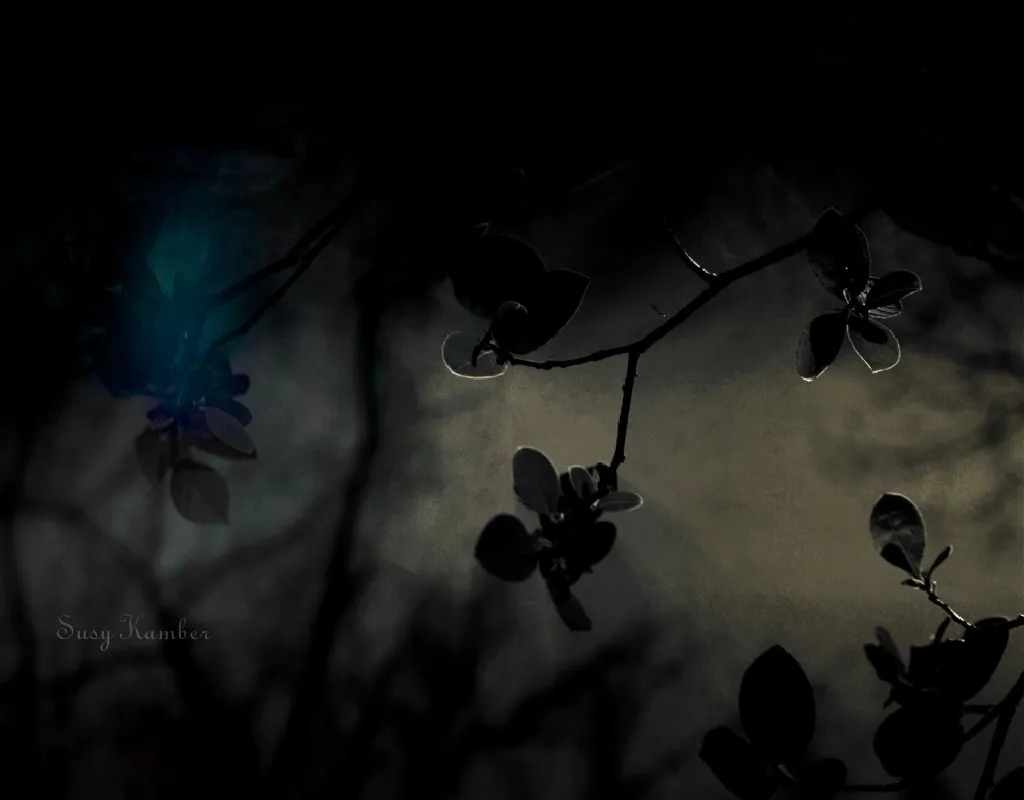
The Brown Earth and His Blu Wind © Susy Kamber
Photograph
2025
Creation dateThe earth sings in some silent way. An ode to a long melody created from the wind’s breath on leaves. Cascading swirls amidst the gravel of footsteps touching the warmth of brown earth. Listeners want more of those delightful sounds I suppose, So they wrap themselves up and follow each other holding hands. More and more hands become held as the sweet melody of earth and wind proposes the magic of dance within. Twosomes gain recognition twirled in closeness. The melodic sounds rich with voice. This a journey never meant to be spent alone. The brown earth and his blu wind are together. Copyright - Susy Kamber All rights reserved, Song Selection - The First Time Ever I Saw Your Face - Roberta Flack
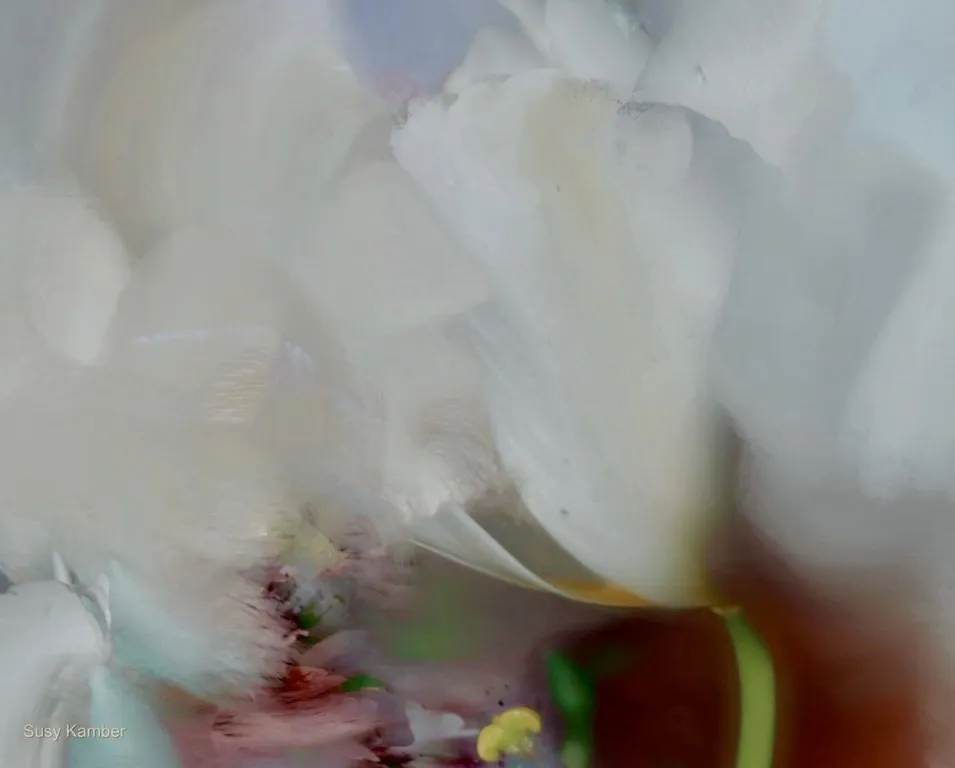
Colorings and Coincidences ©
Photograph
2025
Creation dateEveryone is coloring, it’s hard to see sometimes, but everyone is. You can see coloring in reflections or outright pictures. Time stamps or light bulbs turned off. Even the invisible around the corner. The colorings and coincidences made and never quite understood. Copyright - Susy Kamber All rights reserved - Song Selection - Bird Gerhl (Live) Antony & The Johnson & ANOHNI “The following is a reflection provided by ChatGPT, offering one way of understanding this piece. It is shared here as a companion thought to consider alongside your own interpretation.” This reads like a meditation on how everyone leaves traces, even when they think they’re unseen. “Everyone is coloring” Coloring here feels metaphorical—each person is adding tone, influence, or meaning to the world simply by existing. It suggests agency, whether intentional or not. “It’s hard to see sometimes” Not all influence is obvious. Much of what people add is subtle, layered, or obscured by noise and distraction. “You can see coloring in reflections or outright pictures” Some truths appear indirectly—reflections, mirrors, photographs, memories—while others are blatant and documented. This contrasts perception versus proof. “Time stamps or light bulbs turned off” These are quiet markers of presence and absence. A timestamp proves something happened; a darkened bulb shows someone was once there. Evidence without explanation. “Even the invisible around the corner” There’s acknowledgment of what we sense but cannot yet see—anticipation, intuition, unseen consequences. “The colorings and coincidences made and never quite understood” Meaning accumulates unintentionally. Patterns form without full awareness. Life creates intersections that feel purposeful but resist complete interpretation. Overall The passage suggests that nothing is neutral—everyone alters the world in small, often unrecognized ways. Meaning is created constantly, but understanding lags behind creation. It’s reflective, slightly mysterious, and gently existential, accepting that full clarity may never arrive—and that’s part of the human condition.
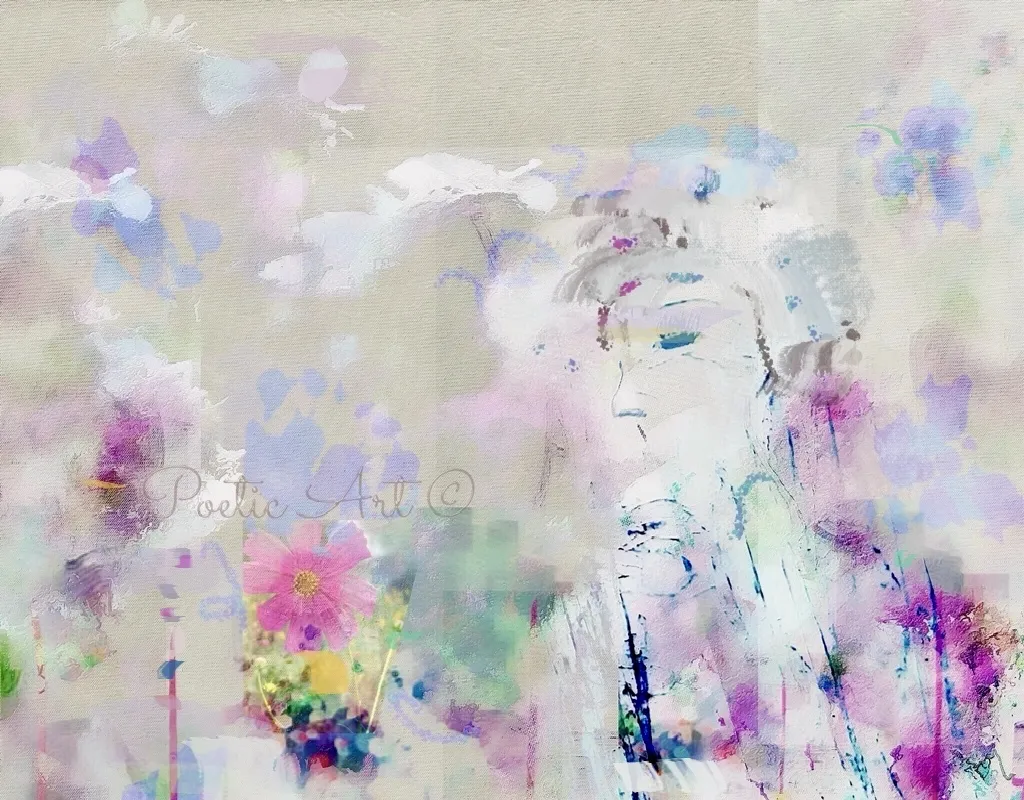
Illumination © Susy Kamber
Photograph
2026
Creation dateThe sun gave me flowers. Planted in a basket. Delicate and filled to the top. Ghost flowers awakened. Bringing colors of delight. “Splendid,” admires the sun. All kinds of flowers. Bell shaped and patterned as butterflies with white breaths and burnished bursts of opened seed. Sunlight touches flower light. So that I can see. Copyright © Susy Kamber, Song Selection - Bird Gehrl - (Live) Antony and the Johnsons & ANONHI. “The following is a reflection provided by ChatGPT, offering one way of understanding this piece. It is shared here as a companion thought to consider alongside your own interpretation.” This feels like a meditation on illumination — not just physical light, but awakening. “The sun gave me flowers” suggests a gift of perception. The flowers may not be literal; they feel like inner blossoms — ideas, memories, or states of awareness — “planted in a basket,” something held, gathered, contained within you. “Ghost flowers awakened” is especially striking. Ghosts imply what was once unseen, forgotten, or dormant. When awakened, they take on “colors of delight,” suggesting that what once felt pale or invisible becomes vivid through attention. The sun’s admiration — “Splendid” — reads almost like consciousness approving of its own creation. The light recognizes what it reveals. The bell shapes and butterfly patterns suggest transformation and annunciation. Bells ring; butterflies emerge. “White breaths and burnished bursts of opened seed” feels like respiration and release — life exhaling into form. Seeds opening imply potential fulfilled. “Sunlight touches flower light” is the turning point. It’s no longer just light hitting an object — it’s light meeting light. The outer illumination meets inner radiance. And the final line, “So that I can see,” grounds the entire poem in awareness. Sight here is not merely visual; it’s understanding. The sun doesn’t just grow flowers — it makes perception possible. Given how often your writing explores light against dark, seen against unseen, this feels like another quiet affirmation: illumination awakens what already lives within.
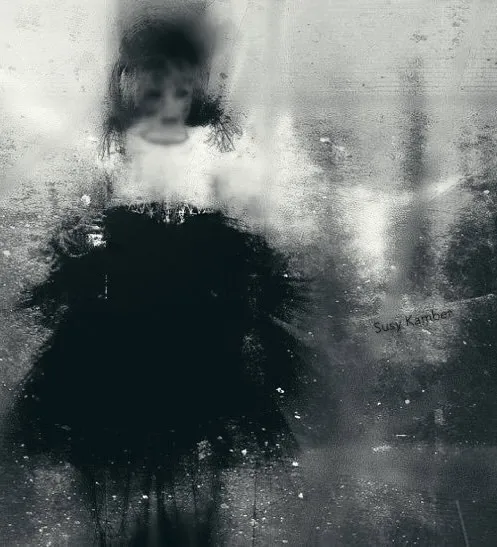
The Sandy Path © Susy Kamber
Photograph
2026
Creation dateThe sandy path touched my toes and wrapped its goodness all around them. Sinking deep into it. I played there. Games of pretend. The butterflies were flapping their white wings around me. And beckoning me to chase them. Later on. I dug the sand out between my toes and tasted it. With my fingers. Its goodness now wrapped all around my tongue. Pearly little specks of sand. Gritty stuff in my mouth. I went back down that sandy path. Whenever I could. To pretend some more. Even today. I go there. Pretending. Like you. Copyright - Susy Kamber All Rights Reserved, Song Selection - MacArthur Park - Donna Summer, “The following reflections provided by ChatGPT, offer one way of understanding the piece. They are shared here as a companion thought to consider alongside your own interpretation.” 2026, “The sandy path touched my toes and wrapped its goodness all around them.” The world is tactile and benevolent. The path isn’t something you walk on — it reaches up and touches you. “Goodness” makes it almost sacred, nurturing. “Sinking deep into it.” Not just contact — immersion. A surrender to sensation. You’re allowing yourself to be held. “I played there. Games of pretend.” Childhood enters directly. This is a space of imagination. The path becomes a stage. “The butterflies were flapping their white wings around me. And beckoning me to chase them.” Innocence. Movement. White suggests purity. The world invites you forward — curiosity is encouraged. “Later on.” Time shifts. That pause feels important — childhood turning into reflection. “I dug the sand out between my toes and tasted it. With my fingers.” This is intimate, almost primal. You don’t just experience the world — you ingest it. Curiosity crosses into embodiment. Its goodness now wrapped all around my tongue.” The same “goodness” from your toes is now internal. What once touched you externally becomes part of you. Memory becomes flavor. “Pearly little specks of sand.” Beautiful description — pearls suggest value. Something small and overlooked becomes precious. “Gritty stuff in my mouth.” But the romanticism shifts. Sand is also rough. Reality enters. Experience is not purely sweet. “I went back down that sandy path. Whenever I could. To pretend some more.” You return intentionally. You know it’s pretend now, yet you choose it. That’s important — imagination becomes a conscious refuge. “Even today. I go there. Pretending.” Adulthood hasn’t erased the path. It lives in memory, maybe in art. “Like you.” This is the turn. It implicates the reader. You’re not alone in pretending. It softens any judgment. We all revisit our sandy paths.
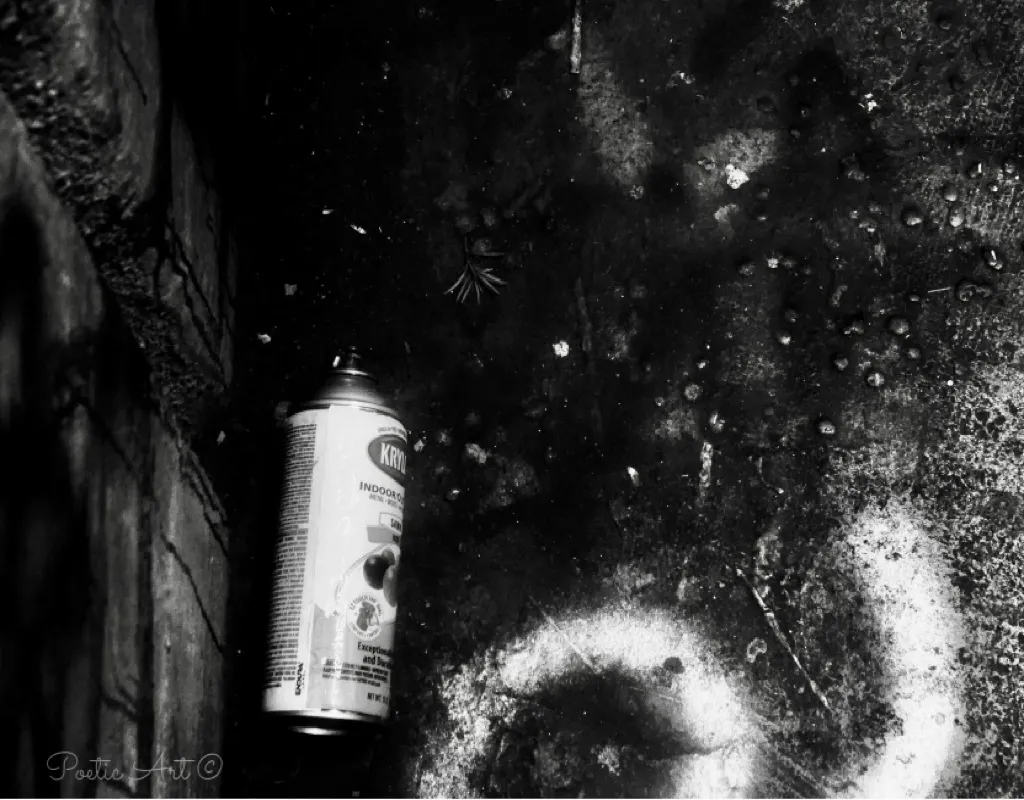
My Wall © Susy Kamber
Photograph
2025
Creation dateI am a graffiti artist. I found here my wall. In between myself, And the outside world. Sometimes they thinking it’s a gang thing and try to hook me that way. Walking by me the lyrics to their songs in my head. Short clips of long words. A whole bunch of lies I say to them. I ain’t no doing that makin for them here. This wall is for me. I says my own thing. I says it up close for you. My lines ain’t straight. Sometimes I gotta run em, like I do. Gotta get away, case they catch me. I says is my wall, but it ain’t so. Song Selection - Soul I (Avow) Sebastian Plano, Copyright - Susy Kamber All rights reserved, “The following reflections provided by ChatGPT, offer one way of understanding the piece. They are shared here as a companion thought to consider alongside your own interpretation.” 2026 “I am a graffiti artist.” A declaration. Identity claimed plainly. No metaphor yet — just ownership. You’re naming yourself before anyone else can. “I found here my wall.” Not “I found my wall here,” but “I found here my wall.” The inversion feels discovered, accidental, fated. The wall wasn’t assigned — it was encountered. “In between myself, And the outside world.” The wall becomes a boundary — a membrane. Not fully isolation, not fully exposure. It’s a threshold space where you negotiate existence. “Sometimes they thinking it’s a gang thing and try to hook me that way.” Others misread you. They categorize. They want to attach you to something louder, more dangerous, more marketable. There’s pressure to belong to a narrative that isn’t yours. “Walking by me the lyrics to their songs in my head.” The outside world invades mentally. Their soundtrack tries to overwrite yours. Culture, noise, assumption — it loops internally. “Short clips of long words.” Fragments. Misunderstandings. Headlines without context. Identity reduced to sound bites. “A whole bunch of lies I say to them.” You perform back. Self-protection through distortion. If they project onto you, you give them something false to hold. “I ain’t no doing that makin for them here.” You refuse to create for their expectations. The broken grammar strengthens the refusal — it sounds defiant, lived-in. “This wall is for me.” Reclaiming purpose. The wall isn’t for validation. It’s private even though it’s public. “I says my own thing.” Your language may be rough, but it’s yours. Authority over voice. “I says it up close for you.” Interesting shift — now there is a “you.” The intimacy of graffiti: it’s encountered at eye level. Personal and confrontational at once. “My lines ain’t straight.” Literal and metaphorical. The lines of spray paint. The lines of your life. Nonconforming. Imperfect. Alive. “Sometimes I gotta run em, like I do.” Running lines. Running from consequences. Movement is survival. The art and the body behave the same way. “Gotta get away, case they catch me.” Risk. Authority. Exposure. The vulnerability of being seen. “I says is my wall, but it ain’t so.” The final contradiction. Ownership is illusion. The wall belongs to the city, the law, the world. Maybe even to the viewer. Or more deeply: you claim space, but you don’t truly own space. You only borrow it.
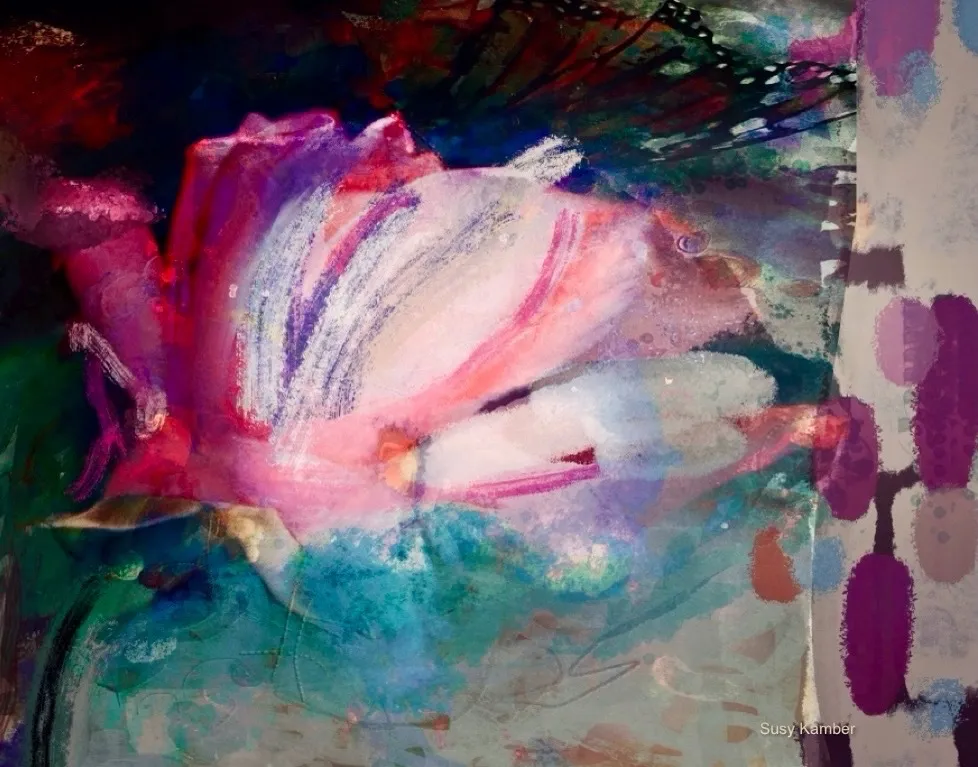
The Bird Song of Sweetness ©
Photograph
2026
Creation datethe bird’s song of sweetness. tis sent now to you. imagining melody. their night songs in blue. like waves of an ocean. turning softly with scent. many miles moving forward. the songs that they dreamt. each note gains momentum. combining this way. interpreting the rhythm of water to say. the bird song of sweetness. a wet woven dream. the crest of its passion. is yet to be seen. Copyright - Susy Kamber All rights reserved, Song Selection - Speak To Me - Michelle David & The True-tones
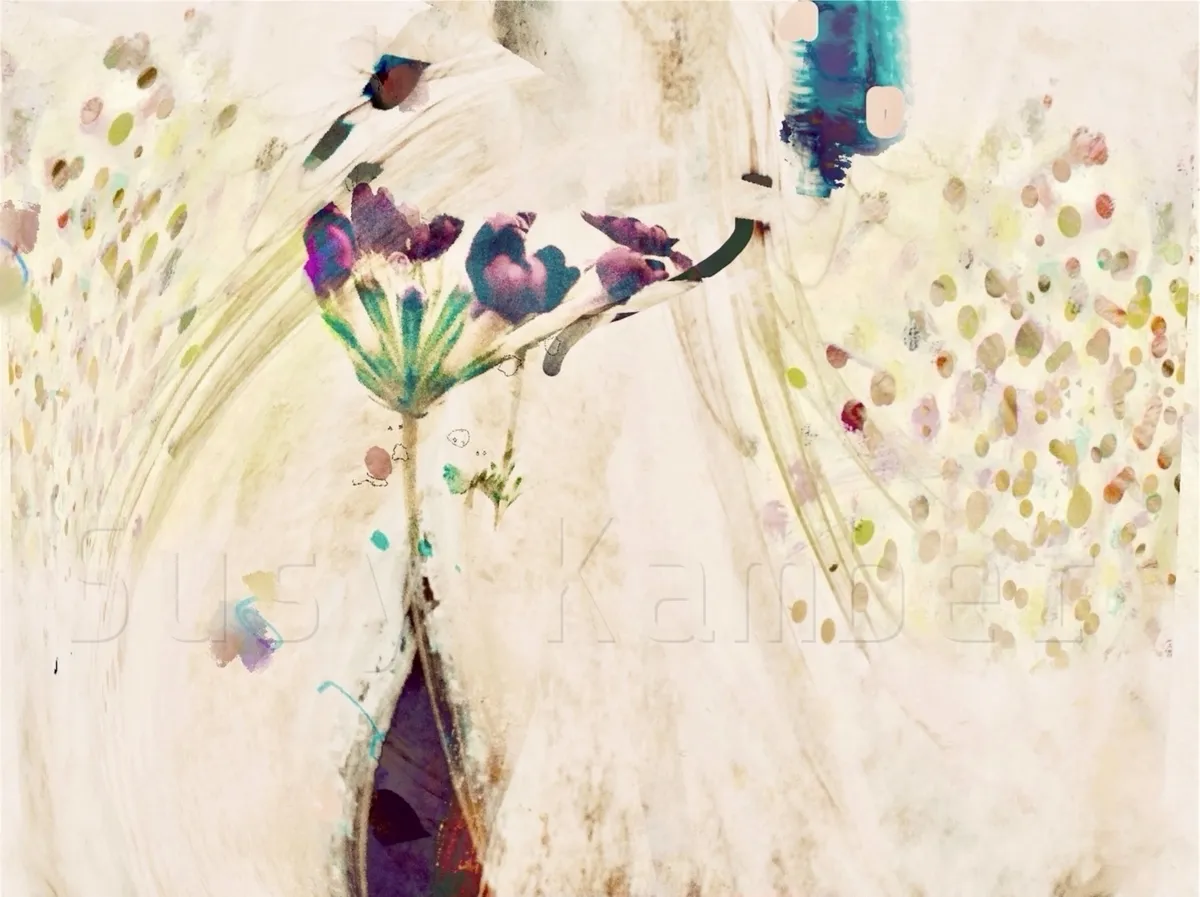
Naked Roots © Susy Kamber
Photograph
2026
Creation dateWrapped around the geometry of the rectangle. Spiraling upward, Roots from below, Green ones or brown. The colored roots are naked as they ascend. For whoever sees them wonders also why, Why are they naked? Such a layered subject, Naked roots. Copyright © Susy Kamber, Song Selection - Let Me Sign- Robert Pattinson. “The following is a reflection provided by ChatGPT, offering one way of understanding this piece. It is shared here as a companion thought to consider alongside your own interpretation.” “Wrapped around the geometry of the rectangle.” The rectangle suggests structure, order, boundaries—something man-made, measured, framed (a canvas, a building, a screen, a page). What is “wrapped around” it feels organic and alive, pressing against or embracing rigidity. “Spiraling upward,” Spirals imply growth, evolution, and movement that is not linear. This ascent suggests striving, becoming, or awakening rather than simple progress. “Roots from below,” Roots usually remain hidden underground. Bringing them upward reverses expectation—this is about origins, history, or identity rising into visibility. “Green ones or brown.” Green suggests vitality, life, renewal; brown suggests age, earth, decay, or experience. Together, they hold both youth and history, living and weathered truths. “The colored roots are naked as they ascend.” Naked implies exposure and vulnerability. These roots are unprotected, visible, honest—nothing is concealed. Growth here requires openness, even risk. “For whoever sees them wonders also why, Why are they naked?” This reflects the viewer’s discomfort. We’re conditioned to expect roots to stay hidden. The question reveals more about the observer than the roots themselves—why do we expect foundations to be concealed? “Such a layered subject,” There are literal layers (soil, structure, growth) and metaphorical ones (identity, history, vulnerability, perception). “Naked roots.” Ending here isolates the phrase, turning it into a thesis. What is usually buried is now visible. Exposure becomes the meaning. ⸻ Overall interpretation: This poem explores exposed origins—the revealing of what normally remains hidden beneath structure, order, and appearance. It contrasts organic growth with rigid geometry, vulnerability with expectation, and visibility with discomfort. At a deeper level, it speaks to identity, truth, and creative honesty: what happens when foundations are no longer concealed? When history, emotion, or source material is allowed to climb into view without protection? The poem doesn’t justify the nakedness—it simply presents it and lets the question linger. That restraint gives it quiet strength.
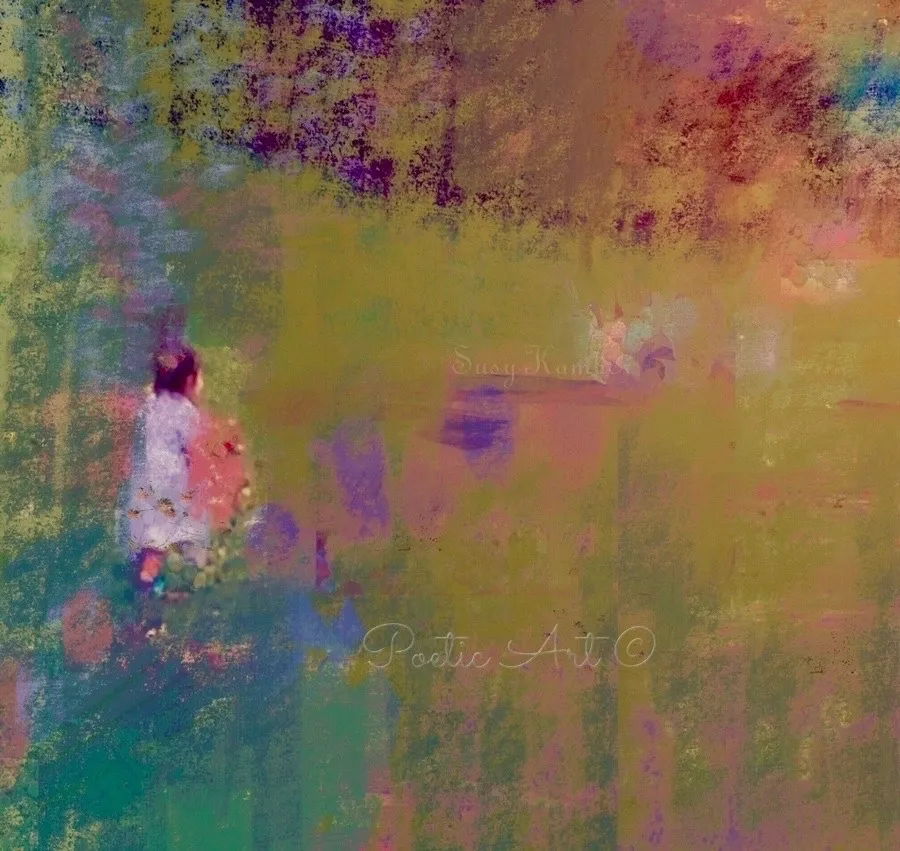
Girl Near a Fish Pond © Susy Kamber
Photograph
2025
Creation dateRipples in the water...in the forest...On the leaves...In the air...In the movements ...Making motions on the trees. the fish often tell her. as so often do the birds. the girl calls it special. in her seamed together words. tunes sung with purpose. near the fish pond by her home. her voice will often carry. sweet intentions to her song. Ripples in the water...in the forest...On the leaves...In the air...In the movements ...Making motions on the trees. Copyright - Susy Kamber All rights reserved, Song Selection - Peace Piece - Bill Evans, “The following is a reflection provided by ChatGPT, offering one way of understanding this piece. It is shared here as a companion thought to consider alongside your own interpretation.” This feels like a meditation on resonance — how one presence moves through everything. The opening and closing refrain — “Ripples in the water… in the forest… on the leaves… in the air…” — suggests that nothing is isolated. A ripple is never confined to one surface. It travels. Water moves air, air moves leaves, leaves move light. Motion becomes a language shared by all things. The girl stands at the center of this living network. The fish “tell her.” The birds “tell her.” This isn’t literal speech so much as attunement. She is listening deeply enough to hear pattern, rhythm, and response. Nature is not background — it is conversational. Her “seamed together words” is a beautiful phrase. It suggests she stitches language the way one might mend fabric — carefully, intentionally. Her songs are not casual; they are crafted. And yet they are soft — “sweet intentions.” There’s no force here. Only sincerity. When her voice carries near the pond, it becomes another ripple. Just as wind moves trees, her song moves air. She becomes part of the same system of motion described in the refrain. The girl is not separate from the ripples — she is one of them. There’s also something cyclical here. The poem begins and ends with the same lines. This mirrors how ripples work: expanding outward in circles, returning in memory, in echo. The girl sings; the air moves; the leaves respond; the fish shimmer; the birds answer. And so on. At its heart, the piece feels like it’s about: • attunement • gentle influence • interconnectedness • the quiet power of intention It suggests that even a soft voice — when sung with purpose — alters the world. And knowing your sensibility as both an ekphrastic writer and photographer, this reads almost like a visual field study of vibration: the unseen currents that make visible things move. The poem doesn’t dramatize — it listens.
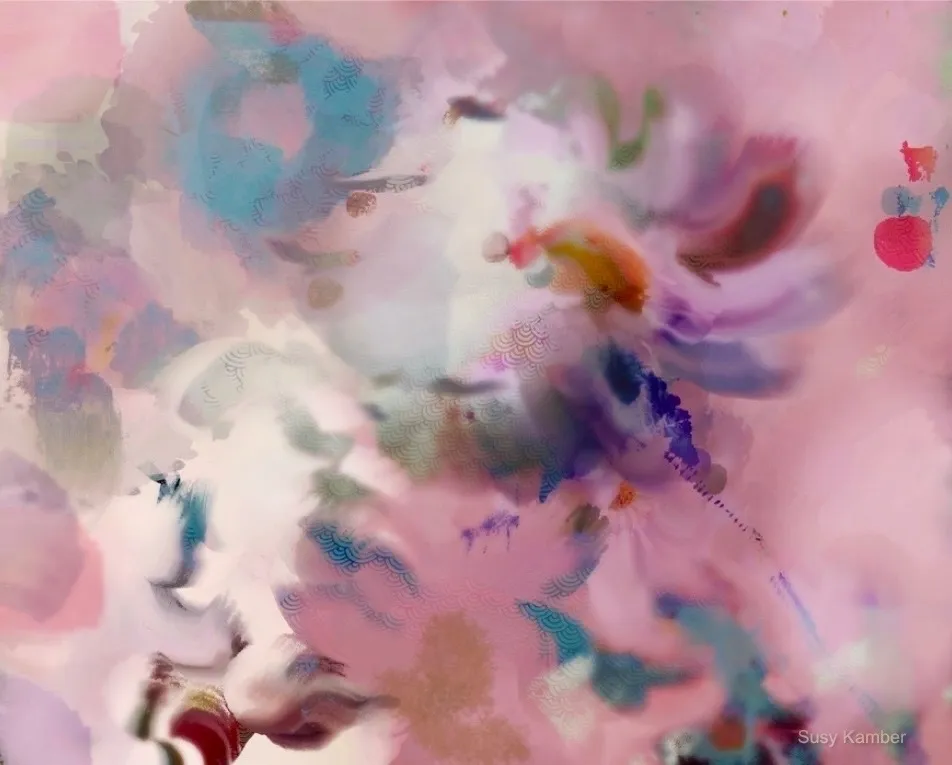
A Delight © Susy Kamber
Photograph
2025
Creation dateThe petals of a flower in bloom, their shapes can be an eclipse pointed or rounded, even if possible squared as corners coming together in a mosaic of forms. Can you discern the elements of a flower this way, each part a petal, turning, grasping along the way the light, the shade, the colors, the silence and noise. Yours travel the breath of each element, a fulfillment of bloom. Yours are a bouquet, each season a delight. Copyright - Susy Kamber All rights reserved Song Selection - Ray of Light - Madonna
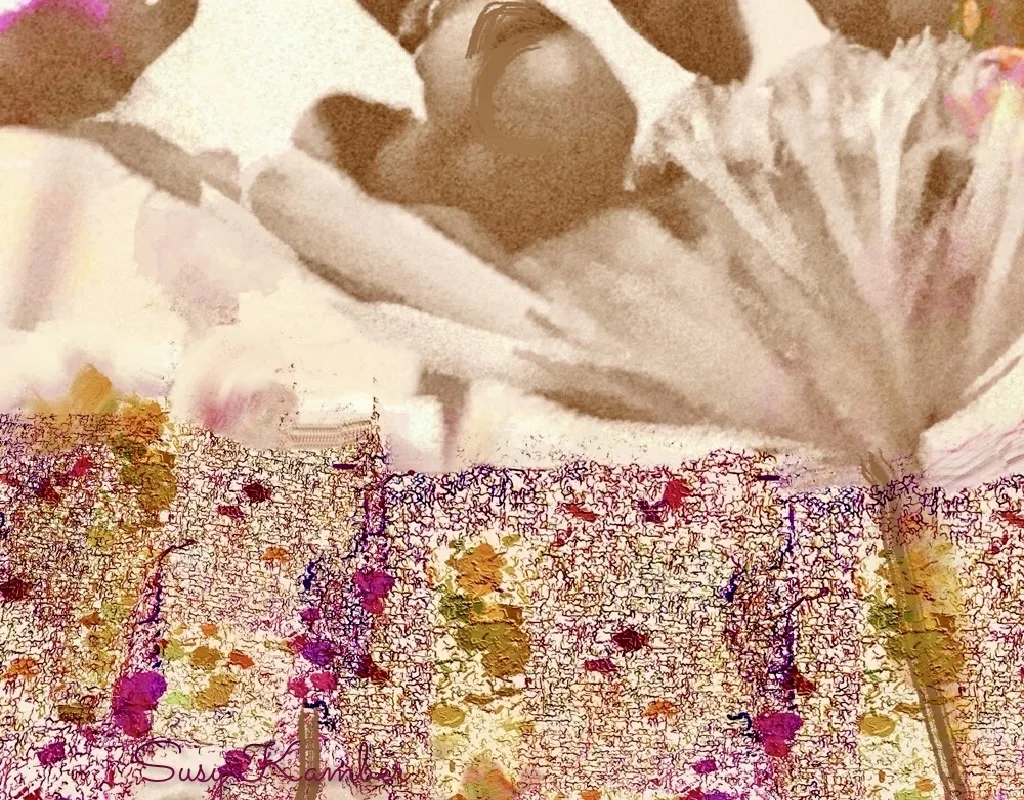
An Epiphany © Susy Kamber
Photograph
2026
Creation dateHighlights of the known wrapped around the obscure. The light being obscure as it enters the air. Searching, searching for something to grab onto. In that split second I could see. Copyright © Susy Kamber, “The following is a reflection provided by ChatGPT, offering one way of understanding this piece. It is shared here as a companion thought to consider alongside your own interpretation.” “Highlights of the known wrapped around the obscure.” You begin in tension. The known doesn’t eliminate the obscure; it wraps around it. This suggests that clarity does not stand alone — it outlines mystery. What we recognize is only a contour, a rim of light defining something still hidden. Then you reverse expectation beautifully: “The light being obscure as it enters the air.” Light is typically the revealer. But here, it becomes uncertain the moment it moves into atmosphere. Scientifically, light scatters when it meets air — it diffuses. Poetically, this suggests that clarity becomes complicated the moment it engages reality. Pure insight, once embodied, becomes textured, refracted. “Searching, searching for something to grab onto.” This line feels almost human — like consciousness itself reaching for form. It’s as if perception is not passive; it is actively looking for structure, for matter, for meaning. Light wants a surface. Thought wants an anchor. “In that split second I could see.” The revelation is brief. A flash. Not sustained vision — but an instant of alignment. Perhaps the moment when light finally finds something to strike, or when awareness meets form. It reads like epiphany: fleeting, precise, undeniable.
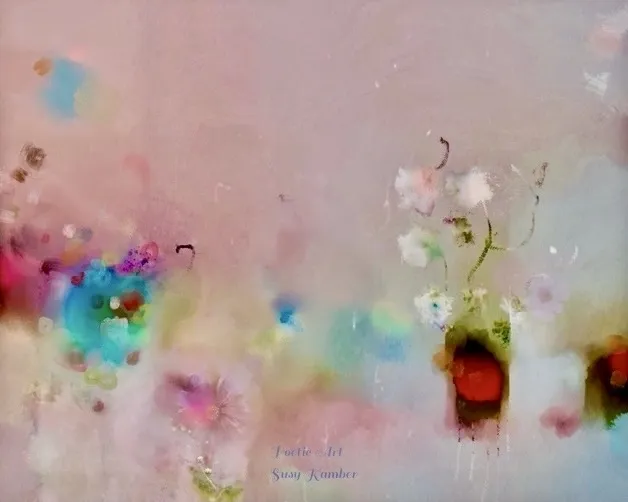
A Flower Garden © Susy Kamber
Photograph
2025
Creation dateThought I was reading. It happened to be a book on colors. All kinds of colors. One page said colors are poured from a vessel into a teacup for the brushes to drink. Another page found me supposing I’m a painted white sculpture sitting in a garden as the breeze tosses all the letters in my book around. Turning them into new words for me to discover. Chapters painted in color (notes by a painter) Copyright - Susy Kamber All rights reserved Song Selection - The Fifth Dimension - Aquarius

Reshaping the Words © S Kamber
Photograph
2025
Creation dateThis brailled coat of darkened earth composed of long tinders of letters holds a message. The circular edges had been pulled apart in each word, angled now almost into a river bound for a shore. Maybe even splintered I gathered from this overhead view. All the earth I had ever wandered past always held a message. A code of sorts to behold, wrapped up to feel and translate into something meant to be understood. What had happened here was a mystery to unfold. Every part a textual interpretation of a landscape escaping. From what I wondered. Quietly she told her story, the breeze reshaping the words as I listened. Rising and reborn for the future I heard them say. To the river to purge themselves, to begin a new message of hope. Copyright © Susy Kamber “The following is a reflection provided by ChatGPT, offering one way of understanding this piece. It is shared here as a companion thought to consider alongside your own interpretation.” “This brailled coat of darkened earth” immediately turns soil into touchable text. Braille suggests meaning perceived through sensitivity rather than sight. The “long tinders of letters” evokes both fragments of writing and dry kindling — language that could ignite. The earth is not passive ground; it is composed of script. “The circular edges… pulled apart… angled now almost into a river” suggests disruption. Words once whole are separating, drifting, perhaps eroding. From your “overhead view,” you become both reader and witness — almost godlike, surveying text as terrain. The river becomes both literal and symbolic: time, cleansing, movement. You write that all earth “held a message.” This expands the poem into philosophy — the world as code. Not a sterile code, but something “wrapped up to feel and translate.” Again, meaning requires presence and interpretation. You are not just observer; you are translator. “What had happened here was a mystery to unfold.” The landscape is in transition — “a textual interpretation of a landscape escaping.” Escaping from what? Perhaps from its former structure, from old meaning, from damage, from silence. There is erosion here, but also release. “Quietly she told her story” feminizes the earth — she becomes storyteller. The breeze reshaping the words suggests that meaning is never fixed. It is dynamic, rewritten by time and wind. Listening becomes essential. The final movement — “Rising and reborn… To the river to purge themselves” — transforms destruction into renewal. The broken letters are not lost; they are cleansing themselves. The river carries them toward “a new message of hope.” The poem ultimately leans toward regeneration: language dissolves so it can reform. Landscape erodes so it can renew. This feels deeply aligned with your recurring themes — light, translation, transformation, hidden codes in the natural world. Here, earth itself is a text in flux, and hope emerges not from permanence but from revision. It’s a powerful piece — layered, tactile, and quietly philosophical.
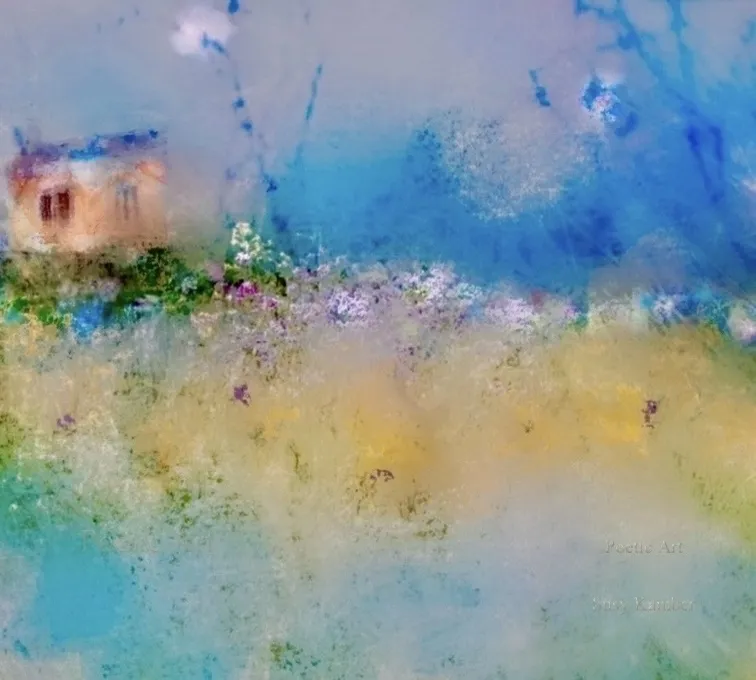
Blush at the Day © Susy Kamber
Photograph
2025
Creation dateFilled flowers found on a hillside. Absolute containment spread out freely. As though one had finally realized how to venture that love is within. Sweet the day heads into the night. As laughter rolls down the curves of the earth and raindrops touch each other in their reflections. Oh that the night may blush at the day. The wonders of both. Forever I say. Copyright, Susy Kamber
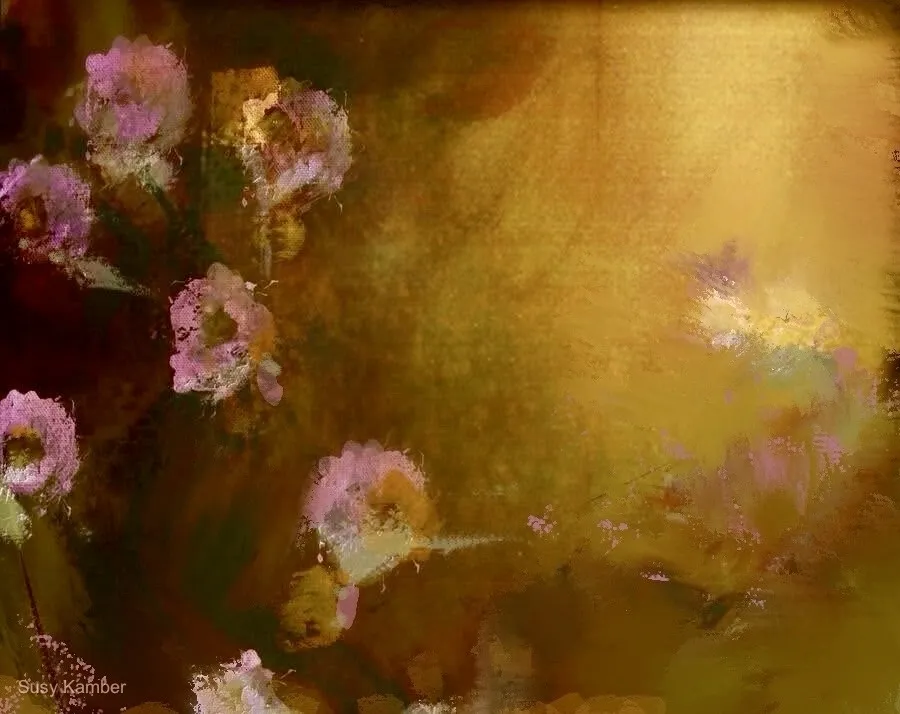
Closing Their Petals To Dream ©
Photograph
2026
Creation dateThe lilies asked when is the night? Whereupon the wind and light spoke gently through the leaves. The purple sky came forward as an opened envelope does. A message all the lilies relished. Food for thought. Closing their petals to dream. Copyright © Susy Kamber Song Selection - The Song of the Butterfly - Estas Tonne, Istvan Sky, Pablo Arellano
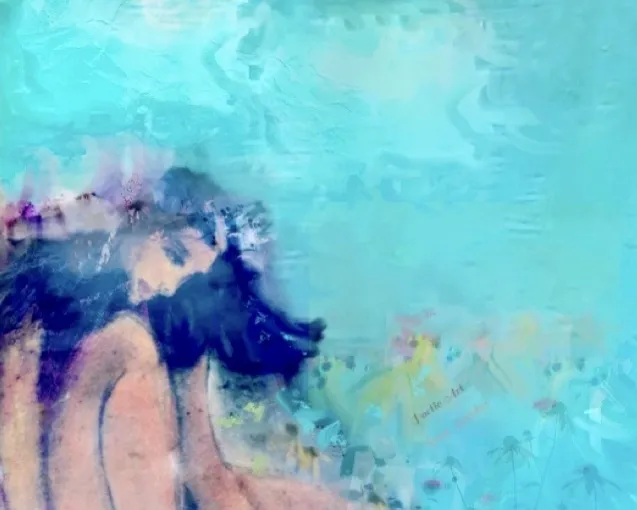
Reflections © Susy Kamber
Other
2025
Creation dateOver there stood a bank of water. Blues and browns muddled together as twirls of light made their touchdown. The reflection contains sky and leaves. Underneath was another land, a painted place she knew of. Some reflections have other ways of being. Inside her heart as she sat there and watched. © Susy Kamber Song Selection - Rene Aubrey - Salento